




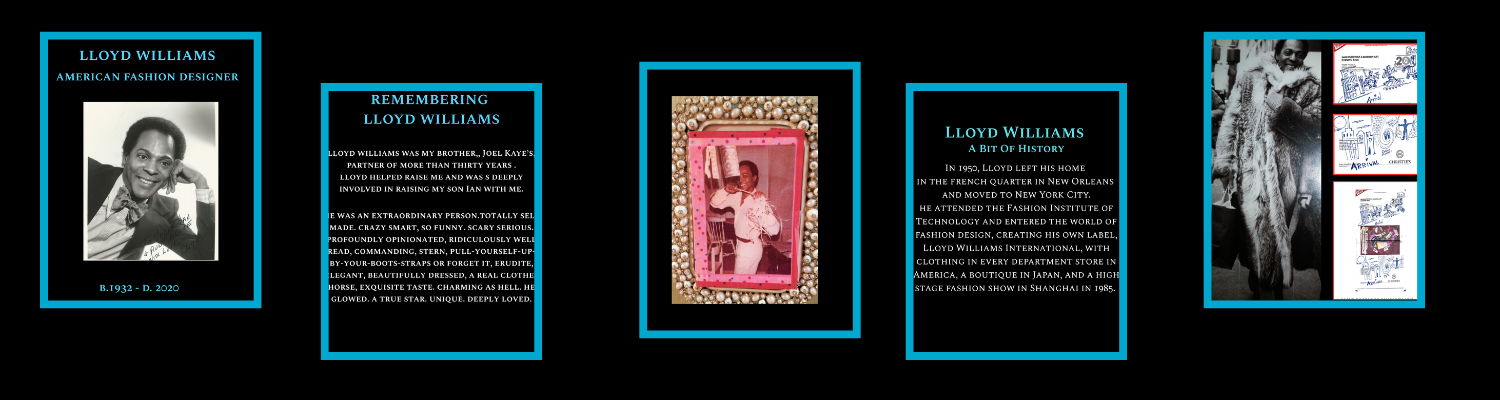
lloyd williams family archive b.1932 - d.2020
lloyd willliams was a fabulous american fashion designer.
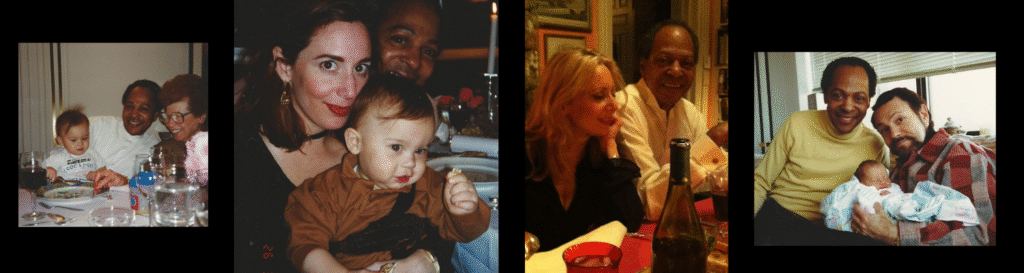
Beloved partner to my brother Joel Kaye for over thirty years,
adoring uncle to my son Ian, much loved partner-in-law to me,
trusted colleague, loving friend, valued teacher.
From the very fabric of our nation, Lloyd is woven into what makes us america.
The very best version of ourselves.
The one that made it possible for his extraordinary life to happen.
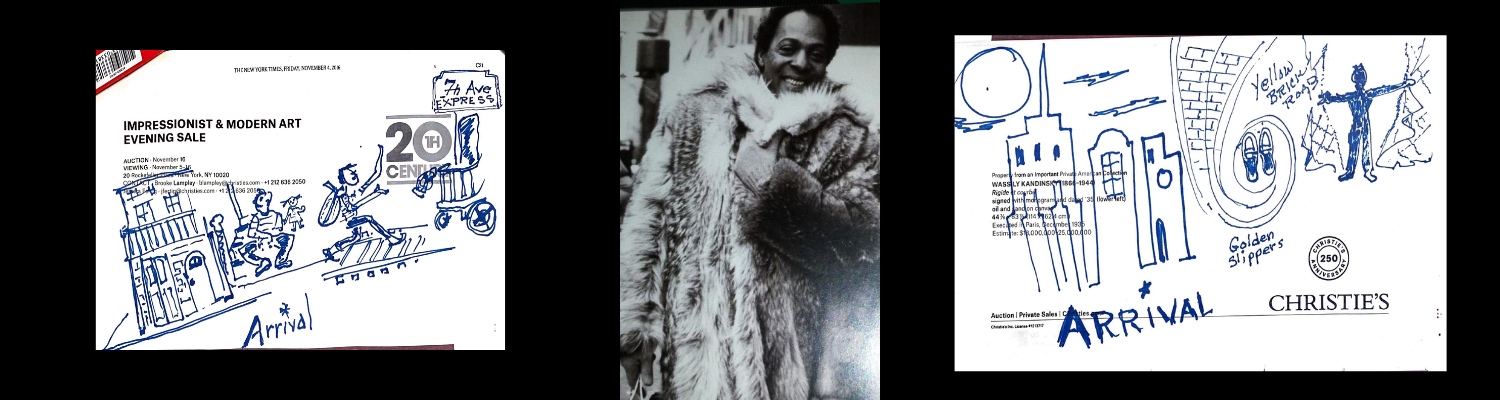
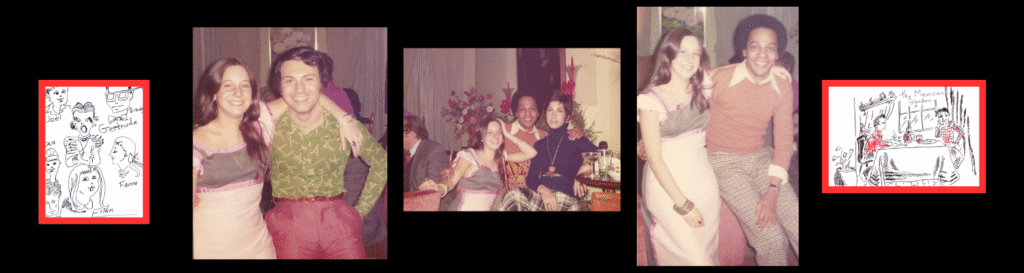
All illustrations on this page by Lloyd Williams
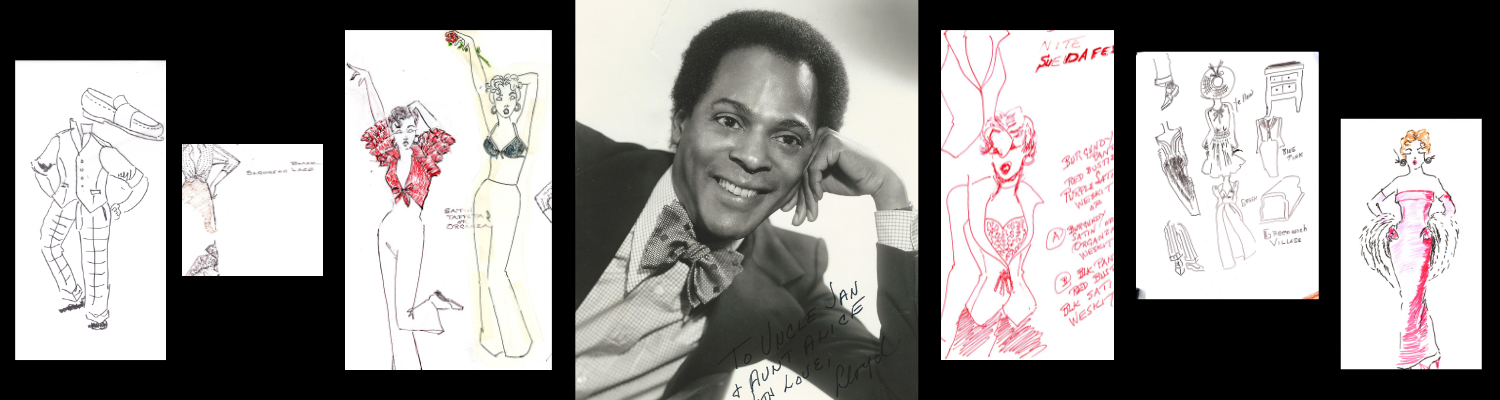
Lloyd Williams (January 13, 1932 – August 12, 2020) was an American fashion designer whose designs and label (Lloyd Williams International) were represented in every major department store in the United States, his own boutique in Japan, and fashion shows internationally.
Early Life
Lloyd was born and grew up in the French Quarter in New Orleans, residing at 337 Barracks Street with his father who was in the insurance business and his mother who was a homemaker. Lloyd was an only child. He learned about clothing and fashion design from his mother and his aunt, who also taught him how to draw at a young age.
While growing up in New Orleans he would hear stories about Jean Lafite, the pirate. Those stories led him to want to be a pirate. He then wanted to be cowboy, then a policeman, before leaving New Orleans and becoming a fashion designer.
After studying for one year as a fine arts major at Xavier University of Louisiana in New Orleans, America’s only historically Black and Catholic University, Lloyd left New Orleans in 1950 at the age of 18. After spending time in the Navy, Lloyd eventually made his way to New York City where he enrolled in the Fashion Institute of Technology (FIT), obtaining a degree in fashion design.
While attending FIT, he found part time work as a fashion designer at a Seventh Avenue firm. After graduating FIT, he would become employed by the firm on a full-time basis. After a few years he would become head designer at a junior petite dress company where he met Hy Rabin, the man who would become his business partner with his own label, Lloyd Williams International.
Lloyd Williams International
In 1977, with the help of his mentor, Hy Rabin, Lloyd created his own label, Lloyd Williams International, starting out mainly with blouses, eventually designing sportwear and dresses in 1982. Lloyd’s designs were showcased at fashion shows throughout America, as well as internationally. Every major department store in America would have a section designated for Lloyd Williams Designs.
In 1981, Lloyd was named Hecht’s Designer of the Year. Later that year he would present his designs at the 17th annual luncheon and fashion show held in the International Ballroom of the Washington Hilton Hotel, an event sponsored by the National Capital Multiple Sclerosis Society where Alejandro Orfila, Secretary General of the Organization of American States would serve as honorary patron. In 1985, at the request of the Chinese government, Lloyd was invited to participate in a high stage fashion show in Shanghai. He was also invited back to New Orleans by the prestigious department store, Maison Blanche, to present his designs at a trunk show. His company was valued between $30 – 40 million in 1992. His label can still be found on sites such as Thredup, Poshmark, and Etsy.
Personal Life
After graduating FIT, Lloyd settled in New York City and met Joel Kaye, son of Russian Tea Room owner Sidney Kaye. This would be the start of what would become a decades long relationship culminating in their marriage.
Though coming from a small family, Lloyd would recount in an interview with his sister-in-law, Ellen Kaye, and her partners, Seth Goldman and Ethan Fein, on their M57 ON-AIR Urban Salon Podcast in 2013 that he recalled growing up in New Orleans with family members whose last names were Laquois and LeVine.
Lloyd died in his apartment in New York City on August 12, 2020.
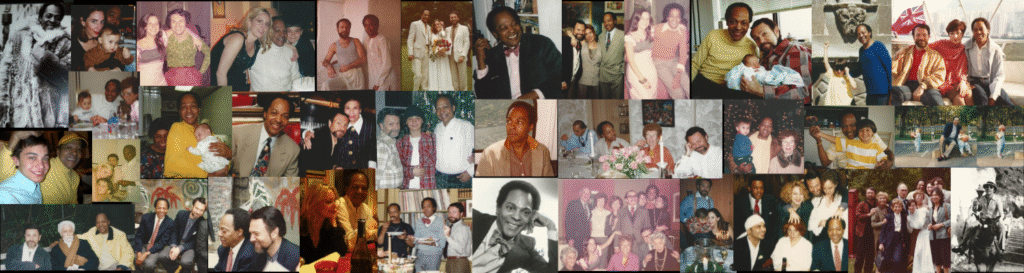
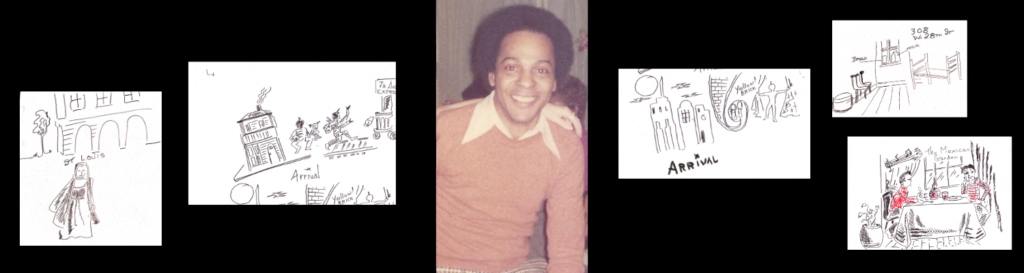
lloyd williams - a bit of history
In 1950, Lloyd left his home in New Orleans and moved to New York City, attended the Fashion Institute of Technology and entered the world of fashion design, creating his own label, Lloyd Williams International, with clothing in every department store in America, a boutique in Japan, and a high stage fashion show in Shanghai in 1985. Lloyd passed away in New York City in 2020 at the age of 88.
listen to interviews with ellen about lloyd below
“What inspired you to write “These Walls Are Alive?” – An interview with Ellen Kaye
Can you hear Lloyd Williams?
“The Hunt Interview” with Ellen Kaye: Can you help our hunt for information on Lloyd Williams?
read about the world that lloyd came from
Lloyd Williams was born in New Orleans in 1932. Huey Pierce Long Jr. (“The Kingfish” ) had completed his term as the 40th governor of Louisiana and was on his way to Congress as Louisiana’s newly elected Senator. Long was a populist politician who was responsible for expanding many social programs and public works projects which benefited Louisiana’s poor. Long’s rise in politics saw him become Louisiana’s political boss, impeached in 1929 upon allegations of abuse of power and authoritarian leadership (although never convicted), and the creation of the Share Our Wealth movement – Long’s attempt to stimulate the economy through federal spending initiatives, a wealth tax and redistribution of wealth. Although the movement disbanded shortly after his assassination in 1935, President Roosevelt incorporated many of those proposals in his Second New Deal.
Also known as “The Big Easy” or “NOLA,” New Orleans is the most populous city in Louisiana and the second most populous city in the South behind only Atlanta, Georgia. Known throughout the world for its Mardis Gras celebration, Creole cuisine and jazz music, it is a major tourist destination for visitors worldwide, known for such historic areas as the French Quarter and Bourbon Street..
Originally founded in 1718 by French Colonists, through the efforts of President Thomas Jefferson and his Secretary of State, James Madison, the United States, in the 1803 Louisiana Purchase, bought the territory from Napoleon’s French regime. Although originally founded and settled by France, the area was first occupied by the Chitimacha people, who remain the only Louisiana tribe to still maintain control over some of their original lands. Possession of the area changed hands several times between France and Spain before the US purchased it.
Before being purchased by the US, the main occupants of New Orleans were Native Americans, Creoles (descendants of French and Spanish settlers), Acadians (Canadian exiles) and African enslaved people. After the US purchase, free multi-racial refugees from Haiti, some of whom brought their own enslaved peoples with them, as well as Irish, German, Polish and Italian immigrants also settled in the area.
Louisiana’s history of racism and discrimination dates back to its original colonization by the French when Code Noir, or “Black Code,” was prevalent. Code Noir restricted the lives and activities of enslaved people and freed people of color alike. In 1786, when under Spanish rule, Louisiana adopted the Tignon Law, requiring all black women to wear a tignon headscarf, whether enslaved or not. Other laws restricting what clothing and jewelry they could wear soon followed.
Of course, racism in America was not limited to Louisiana. In fact, slavery was a driving force since the founding of the United States. The United States might never have been if the Three-fifths Compromise had never been reached during the Constitutional Convention in 1787. The Northern and Southern states were deadlocked in attempting to create our representative form of government. The Southern states wanted enslaved men counted in determining the number of representatives each state would be afforded, while the Northern states wanted only freed men counted. The compromise, proposed by Connecticut, was that each state would be afforded two Senators and Representatives to the House of Representatives would be based on the number of freed men in the state plus ⅗ of each enslaved man.
The rights of women were not mentioned in the Constitution until the 19th Amendment granting women the right to vote was passed by Congress in 1919. In order to become part of the Constitution, 36 states needed to ratify the Amendment. Both houses of the Louisiana state legislature refused to ratify the amendment. However, the state House of Representatives voted to amend the state constitution to grant women the right to vote, but the state Senate voted that amendment down as well. In August 1920 Tennessee became the 36th state to ratify the 19th amendment,making the 19th Amendment part of our Constitution. Louisiana did not officially ratify the 19th Amendment until 1970.
In 1811, the largest rebellion of enslaved people occurred in New Orleans when 500 enslaved Africans rebelled in what became known as the German Coast Uprising. The final battle of the War of 1812, known as the Battle of New Orleans, occurred in the area when American troops led by General Andrew Jackson and the pirate, Jean Lafitte, defeated the British. A crucial naval battle occurred in 1862 leading to the capture of New Orleans by Union troops.
The Port of New Orleans was a major hub of America’s slave trade, where goods, supplies and enslaved people were transported and sold. New Orleans was also home to the largest slave market in the country. By 1860, New Orleans was the 6th most populous American city and had the country’s second highest per-capita income. Louisiana became the sixth state to secede from the Union, joining the Confederacy in 1861.
After the Civil War ended, Louisiana was readmitted to the Union in 1868, and, in 1872, P. B. S. Pinchback became the first person of African American descent to serve as governor in the US. Louisiana passed the Thirteenth, Fourteenth and Fifteenth Amendment to its state constitution, abolishing slavery, recognizing African Americans as citizens, and guaranteeing African American men the right to vote. However, once Reconstruction ended, New Orleans, and the rest of Louisiana, experienced the discriminatory impact of Jim Crow laws. White supremacists, like the White League, heavily contributed to the resulting violence against formerly enslaved people, including lynchings statewide. Public facilities were segregated, and many African American descendants became disenfranchised. Literacy laws and poll taxes were implemented to prevent African American descendants from voting. In 1898, a state constitutional amendment was passed containing a “Grandfather Clause” granting the right to vote for only those men whose grandfathers, fathers, or themselves were eligible before the Civil War. Public schools remained segregated until 1960 and those of African descent were prohibited from serving on juries or holding public office. Homer Plessy, a New Orleans free person of color, became the plaintiff in the seminal Supreme Court case, Plessy v. Ferguson, upholding “separate but equal” as constitutional in 1896.
In 1910, Louisiana became the second state to pass a “one drop” statute, mandating that anyone with any trace of Black African ancestry will not be considered white. In 1967, the Supreme Court ruled “one drop” statutes unconstitutional when it decided the case of Loving v. Virginia, ruling that anti-miscegenation laws prohibiting interracial marriages, which traditionally relied on the “one drop” rule, violated the Equal Protection and Due Process Clauses of the Constitution. In 1970, in an attempt to maintain racial discrimination and white supremacy, Louisiana passed the “1/32 law” classifying anyone with 1/32 or more of Black African ancestry as Black. That law was finally repealed on July 5, 1983.
New Orleans has a storied place in music history, blending the European, African and Latino American cultures of its diverse inhabitants. Its early music was a unique blend of musical instruments from its Europe inhabitants and the rhythms of its African descendants, eventually leading to the birth of jazz. Cajun, Zydeco, Acadian and Delta Blues also influenced much of the music coming from the New Orleans area, some of which contributed to America’s rhythm and blues and rock and roll revolution. New Orleans has produced many of music’s early pioneers, such as Louis Armstrong, Buddy Bolden, Jelly Roll Morton, Louis Prima, Fats Domino, Allen Toussaint, The Boswell Sisters, Mahalia Jackson, Lizzie Miles, Billie Pierce, Sweet Emma Barrett, Nellie Lutcher, Irma Thomas, and Dr. John, to name a few.
New Orleans has also been home to the LGBTQ plus community for over a century. In 1933, one of the oldest gay bars in the country, Cafe Lafitte, opened, eventually creating Fat Monday Luncheon in 1949, the longest running gay event in America. Beginning in 1958, the Krewe of Yuga formed, linking its traditions to the historic Mardis Gras Carnival, later followed by the Krewe of Petronius in 1961 and the Krewe of Armenius in 1969. Tennessee Williams wrote A Streetcar Named Desire in 1938 in his home in New Orleans and Gay activist groups began to form in the 1970’s. In 1991, the New Orleans City Council passed a gay non-discrimination ordinance, and, in 1997, Louisiana became the first state in the Deep South to pass a hate crime law which included protection for sexual orientation.
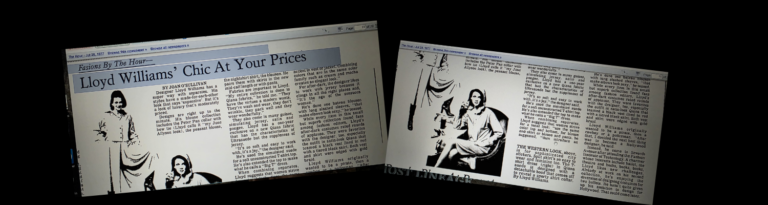
Designer Lloyd Williams has a super way with separates. His styles have a made-for-each-other look that says ‘expensive’. But it’s a look of luxury that’s moderately priced.
Designs are right up to the minute.His blouse collection includes the Peter Pan collar with bow tie (Lloyd calls it “my June Allyson look”), the peasant blouse, the nightshirt shirt, the blouson. He pairs them with skirts in the new mid-calf length or with pants.
Fabrics are important to Lloyd. “My entire collection is done in Qiana fabrics,” he told me. “They have the virtues a modern wants. They’re wash and wear, they don’t wrinkle, they pack well and they wear wonderfully.”
They also come in many guises, simulating jersey, satin and pongee. Lloyd Has a one-year exclusive on a new Qiana fabric that has the characteristics of a Ultrasuede but the suppleness of jersey.
“It’s so soft and easy to work with, it’s a joy,” the designer said. He’s used the simulated suede for a soft unconstructed T-shirt top. He’s also extended the top to make what he calls a “Big T” dress.
When combining separates, Lloyd suggests that women strive for a tonal look: “use the same color top and bottom, for blouse and skirt or blouse and pants, he suggested, “then introduce an accent in vest or jacket. Combining colors that are in the same color family such as cream and mocha creates an elegant look.”
For after-dark, the designer likes to work with jersey because it clings in all the right places and, “it’s the age of the sensuous woman.”
He’s done one bateau blouson with long slashed sleeves, “that make elbows look sexy,” he teased.
While every item in this small but superb collection found fans among fashion editors, Lloyd’s after-dark costumes rated rounds of applause. They were favorites with the designer, too, especially the outfit in satin-look Qiana that teamed a black vest lined in red with a tiered black skirt. Both vest and skirt were edged with gold braid.
listen to an interview with lloyd williams by ellen kaye below

Ellen: When we started doing this whole New Orleans thing you know, we started racking our brains and like, “Who the heck do we know down in New Orleans?” And it was, like, one of those, I guess a lot of things in life that are just standing right in front of you and you just don’t see it, I completely forgot that one of the like, one of the people that actually raised me and helped raise my son, Lloyd Williams, is actually from New Orleans. And so, we were together the other night and I said, “Lloydie Lou, will you come on the show and just talk about being from New Orleans?”
Lloyd: And I said, “Absolutely.” “No doubt about it.”
Ellen: I want, I wanna give a little bit of an introduction. I think it’s always hard, and Seth is gonna leap in on this interview, because the better you know someone, the harder it is to interview them. But let me just put it this way, when I was I guess when I met you when I was 12 and you Lloyd had been with my brother Joel for I think most of my life since I can remember, when I was 12 years old. And the first time, our first date together, I should say, all of us we went to see Greta Garbo, a double feature was it Camille and Anna Karenina?
Lloyd: Yes, it was.
Ellen: And at the time, as always I didn’t actually realize, no, at the time really, it was really at the time, I didn’t realize that Joel and Lloyd were together, so I fell desperately in love with Lloyd.
Seth: I can understand.
Ellen: I remember becoming really disappointed when I found he was unavailable, but I don’t remember what I found out. I just didn’t know for a long time.
Seth: Wasn’t that two years ago?
Ellen: Yes. So, Lloydie Lou, you were born in New Orleans and by the time I met you, you were about to become, I think right then, you were about to become an extremely successful fashion designer with your own label, with factories in Hong Kong, am I, am I correct? ‘Cause remember, I was a kid and I don’t know if I’m getting it right. And leading a really glamorous life and that was who you were to me, but the New Orleans piece I only knew as something, like a little bit of that.
Lloyd: Well, I grew up in New Orleans in the French Quarter, which was the original settlement made by the French. And that’s comparable to living in the Marais in Paris or Chelsea and Knightsbridge in London. So, it was an ideal childhood, but after wanting to be a policeman and then a cowboy, I decided I was gonna come to New York and go to school, which I did. And voila. Upon finishing school, I met Joel, then you, and here I am.
Ellen: And then Ian, my son, Ian.
Lloyd: Mustn’t forget Ian.
Ellen: Ian, who Lloydie really you know just was completely involved in the day-to-day upbringing of Ian, so I was very blessed in that.
Lloyd: Ian is my other heart.
Ellen: I know, I know. So I can’t wait till he hears this, actually, interview, but, so, tell us what street you were born on in New Orleans. Do you remember?
Lloyd: Yes, I do.
Ellen: Okay.
Lloyd: The address is 937 Barrack Street, which is, as I said, New Orleans was a city square and I was just at the edge of the ramparts which frames it and the Esplanade, which evokes Truman Capote, Tennessee Williams.
Ellen: Yes. So wait, so when you were growing up, was there… I hate really general questions. I don’t wanna ask you these, like, giant, like, “What was that like?” But was there music everywhere then like there is now? I mean, did you walk down the street and were people playing music? I mean, what was it like?
Lloyd: Well music was very integral in the life of New Orleanians, but I think you’re speaking about specifically the Preservation Hall, which I remember, and also the parades where everybody would second line. Those were very memorable occasions.
Ellen: Now did you second line? ‘Cause I didn’t even know what Second Line was until Gary Granata showed us in September. He took Ethan and I out to a Second Line. So I’ve known you all this time and I didn’t even know about Second Lines. I didn’t know anything.
Lloyd: I’m not quite sure, but I think Second Line started after a body was buried.
Ellen: Okay.
Lloyd: And the attendees were leaving the parade, were leaving the funeral rather than the interment, then they decided to sing and dance because, to celebrate the life of the deceased. Hence the Second Line.
Seth: And as I on the radio while we were down there, New Orleans, the place that put the fun in funeral.
Ellen: Was that, wait, was that an ad or what?
Seth: No, no.
Ellen: like a tourist ad?
Seth: What they were doing, they were doing the the fun drive on the radio there.
Ellen: Oh, on WWZO
Seth: the public radio station. WWZO. And somebody said, “Yes,” and, you know, I think they were talking about the funeral parades and things like that, and they said, “Yes, ’cause we’re the people who put the fun in funeral.”
Lloyd: I think it was funk in funeral.
Sandi: Can I ask you just a little question? Did you learn to play an instrument when you were in school? Was it part of your schooling to learn instrumental music or singing, things like that when you were younger?
Lloyd: We had musical appreciation.
Sandi: Oh.
Lloyd: And we always attended the youth concerts. There was a an orchestra in New Orleans based, and I remember the conductor’s name was Masimo Freccia. Pretty good, right?
Ellen: Wow. Holy crap. Wow.
Sandi: How were how old were you when you came to New York? You said you came here to go to school
Lloyd: Yes.
Sandi: and, study
Seth: Fashion?
Sandi: Fashion. Thank you.
Lloyd: I was 18 when I left New Orleans, and I came to New York, and I did a little detour called, you know, enjoying life.
Sandi: Yes. Go through that.
Lloyd: But two years later, I went to school, graduated from the Fashion Institute and started on that route of fashion design, which turned out to be very successful. I had my own label, Lloyd Williams International, which was represented in every department store in America, a boutique in Japan, and most proudly, at the request of the Chinese government, I staged a fashion show in Shanghai in 1985.
Sandi: Bravo. Bravo.
Ellen: I gotta say something that’s gonna sound really awkward and weird, but I have to say that you’re Black because we’re on the radio
Lloyd: But beautiful.
Ellen: the idea that, that people need to know that that’s like a whole ‘nother component to your coming from New Orleans without any family trust fund or anything.
Lloyd: That’s … that’s a book.
Ellen: You came on your own, and you made it happen, and, you know, you made a life for yourself. But it’s not quite like coming, you know… in a way, it’s like coming from Russia. I mean, you know what I’m saying? It’s the same thing. You were like an immigrant in that sense, that you came here and started a brand new existence and climbed up to the top, which back then actually I think still now is incredibly difficult. I’ve always really you know how I admire you.
Lloyd: And I, you.
Ellen: It’s a different, but it’s a different trajectory. So Sandi, go on. I love your questions. Do you have more?
Sandi: No, that was fabulous. But, you know, he just said, and it just clicked now. I’m from Michigan actually, and Hudson’s Department Store, which was really big in Detroit, carried his line.
Ellen: Oh, my God.
Sandi: And here I am
Lloyd: Really?
Sandi: you know, 30 years later meeting the man behind the clothes. It’s amazing, you know?
Lloyd: Six degrees of separation.
Ellen: I was really lucky ’cause I got to wear all of his blouses. And also, he made my high school graduation outfit, which was really beautiful. So I was really, I was very, very lucky, and other things as well.
Sandi: Mm-hmm.
Ellen: You know. So what do you think? Do you think that you’ll come down to New Orleans with us sometime, or do you, do you ever feel like going back or have you gone back? I don’t even know.
Lloyd: Yes, I did go back. I went back to New Orleans about 15 years ago with my partner, Joel, your brother. And ironically, I was invited back to make a trunk showing at Maison Blanche, a premier department store in New Orleans. So, with a full page ad in the Times-Picayune. And contrary to what Thomas Wolfe said you can go home again.
Seth: Did you find the city very changed or any I mean, when we went down obviously it was my first time just a few weeks ago. Obviously, the French Quarter’s pretty much what it always was. They haven’t modernized it that much, but what about the rest of the city? Did you notice a real change, or does it all pretty much seem like it did?
Lloyd: No, I agree with you that the Rue Carrée remains the same. But I think like most people, when you return home and you have wonderful affectionate memories, since you’ve grown up and you’ve distanced yourself, it always seems smaller than you remember.
Seth: Oh, yeah. Every once in a while, I go back to the house that I grew up in, and I’m amazed that our family could’ve lived in such a tiny house, and it seemed so big when I was eight years old.
Lloyd: Well, speaking of going home, about a couple of years ago, a friend of mine that, you know the Root family?
Ellen: Oh, yeah, of course.
Lloyd: They went on holiday, and I gave them my address. And they looked up my address. The house still stands, and they took photographs and made drawings and presented them to me.
Ellen: Oh, I love it. Well, they’re both painters.
Lloyd: that I, that’s something that I treasure.
Ellen: That’s really cool. And you may not realize this because Ian went straight back to school, but he went to your house. Has he told you yet?
Lloyd: Yes, he did.
Ellen: Okay, good. I wanted to go, so we’re going next time.
Lloyd: We’ll all go together.
Ellen: I would love it. Let’s really do it.
Sandi: Is there someone still living there? Is somebody in the house?
Ellen: Somebody’s living there, I think. I don’t know.
Lloyd: Oh, yes, the house is occupied.
Sandi: It’s standing, it’s occupied?
Lloyd: Mm-hmm.
Sandi: Oh.
Ellen: what are all your family names, Lloyd? I mean Williams obviously, but are there other family names on other sides of the family?
Lloyd: The names that I remember, I would say were mostly French. Like there was a family member called Lacroix and there was a family member called Levine, which is not Jewish but French for the divine.
Ellen: Right, right.
Lloyd: And then naturally the Williams.
Ellen: I love it. And, so, and are there cousins down there now, or, you know…
Lloyd: There may be some distant cousins, but, you know, being an only child, we had a very, very, you know, small family. And with the death of my parents, then I’d lost contact.
Ellen: What was the family business? What was everybody doing? What kind of work?
Lloyd: My father was in insurance, and my mother was a homemaker. And I remember really the biggest influence on my life was my aunt who she taught me how to draw. She taught me about clothing and fashion and a little French dressmaker who made her clothing. And she also taught me about Jean Laffite and the pirates and the history, you know, of New Orleans. And so it was a very full and, you know, rich growing up experience. But I think the biggest thing that she gave me was undeclared love, which gave me a great sense of self-esteem. So I go charging on and I think one of the things that mostly influenced me, because of her, that I can do anything. I can mount all kinds of hurdles.
Ellen: I know. I know that about you.
Sandi: Are you fluent at speaking French also?
Lloyd: No, not at all, because when I was growing up most of the people in my would… the adults would speak a patois called Creole. And they didn’t want the children to know what they were talking about, so they spoke Creole. And they didn’t teach the children the patois.
Seth: that’s why Yiddish is almost a completely lost language. You know, my grandparents, again, would speak Yiddish so that the kids didn’t know what they were talking about.
Lloyd: again, six degrees of separation, right?
Seth: Exactly.
Ellen: And, you know, Lloydy aunt Alice. Joel’s our aunt and Aunt Alice and, like, Walter, Sidney, all of them, my grandparents would speak, I think first they spoke Polish, I think, so these children wouldn’t understand. It might’ve been Russian first and the kids learned Russian. They spoke Polish, the kids learned Polish, and then they spoke Yiddish. And I don’t know what happened. But I know Alice knew Yiddish, so but I don’t I don’t speak any of the… They know And my, house I think they just whispered or they had conversations in other rooms. You know, what about you? Did they speak any other language?
Seth: Well yeah, my grandparents would speak Yiddish so we couldn’t understand.
Ellen: Do you think you’ll come back on our show here and, we can kind of weave you into our whole continuing New Orleans thing?
Lloyd: Absolutely anytime, I’m yours.
Ellen: Oh, I’m really grateful. I love it. I just love the fact that it’s for real, you know, in a world full of people trying… And what’s really so funny is, like, you know, us marketing nuts, like, you know, we’re always, like, cooking up all these crazy ideas, but meanwhile the real thing is so much like, there it is. Here you are.
Lloyd: Well, apropos of New Orleans, Ian went down with you for the Moscow 57 pop-up café, and he promised that he would visit my house after I gave him the address. And then when he returned to New York and I saw him, I had made a request. The one thing I wanted was a box of pralines. And Ian said that, he apologized for not having them because he bought them but he ate them all.
Ellen: All right, so we know what when we go down get pralines right. Maybe he’ll come with us and we’ll do all of that.
Lloyd: Yes.
Ellen: we’ll, we’ve been talking to Lloyd Williams, and thank you, Sandi, so much for jumping in because that was fantastic.
Sandi: Just one more thing before we go.
Ellen: Good. I’m glad.
Sandi: Lloyd, why don’t you tell us what pralines are, for those of us that are not been to that area for a long time. I have, so I know what they are.
Lloyd: You remember them fondly, too?
Sandi: Yeah.
Lloyd: It’s a sugared confection. Primarily, I think it’s maple syrup and pecans.
Sandi: Mm-hmm.
Lloyd: And they’re formed into little patties, and it’s really a treasure and something that we all enjoy and it’s a high, it’s a high point of a visit to New Orleans along with the Café du Monde and the beignets.
Ellen: That’s right.
Seth: Which we had at, what was it Ethan, that
Ellen: Yeah.
Seth: 3:30 in the morning or 4:00 in the morning we wound there?
Ellen: I know, but the café was totally full which, as you know about me and my hours, I loved. The whole fricking place was rocking. It was jam full of people and, and they were, there was a great mix of people, too. It really looked like the world.
Ethan: Ellen saw a great marketing opportunity. 5:00 in the morning at the Café du Monde. She said she walked in at 5:00 the morning and said, “Damn it, I don’t have any flyers.”
Ellen: I said, “These are our people, come on.” It was true, though, it looked like the world, which is just, like, it was really cool. So all right, Lloyd, well, thank you so much. You’re gonna stick around though, right?
Lloyd: Absolutely. And thank you again.
Ellen: Absolutely. We just, we’re very grateful and it’s, I’m just, thank you again, Sandi, ’cause it’s awkward when it’s your own family, let me tell you something. They don’t prepare you. And it’s hard when you don’t, like, when you know someone so well but you really don’t know them at all, you kind of, it’s hard to, like, share what the heck. Like, what do people want to hear? So that was really great.
Lloyd: Oh, thank you, Sandi. I loved the questions. We will talk more about New Orleans. Have you been?
Sandi: I have been, but not since Katrina. I haven’t been since the, the storm, but yes, I went twice before and I was absolutely fascinated by the city, and just the diversity that’s there.
Lloyd: Yes.
Sandi: And the whole the herbal shops. The fangs took me out a little bit. With the vampire shops and things like that and the whole sort of, I don’t know if was witchcraft or whatever thing that was going on.
Seth: A lot of voodoo, voodoo shops down there now.
Sandi: But the buildings, the lawns, the architecture were just incredible. Not to mention the music every other store or every other building
Ellen: Sandi you just gotta come down with us.
Sandi: I do.
Ellen: I mean, Ben says he’s gonna come. I mean, like, everybody at this table is supposed to go.
Seth: All right, we’ll rent a bus.
Lloyd: Get on the bus.
we recommend these books that illuminate lloyd’s story
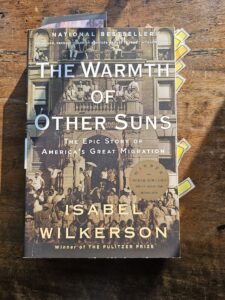
“The Warmth of Other Suns” by Isabel Wilkerson
Shout out to
“Caste” & “The Warmth of Other Suns”
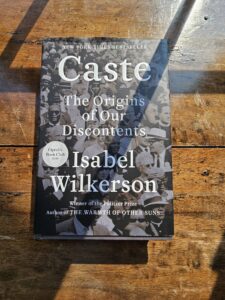
“Caste” by Isabel Wilkerson
two crucial books to read by isabel wilkerson above


read some history that builds in a bit of background about the world that lloyd williams came from and lived in
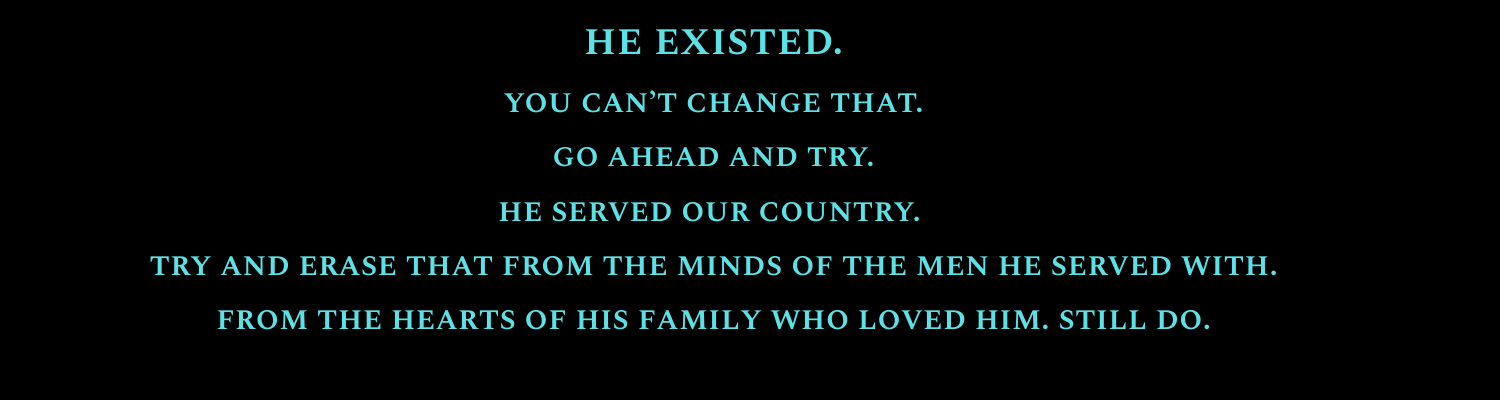
While the US Navy was established in 1775, it was not until the War of 1812 that African Americans were allowed to enlist. In fact, the official policy of the Navy at the start of the war did not allow African Americans to enlist. It was only out of desperation and a shortage of white enlistees that the policy was changed. Many of those who enlisted were enslaved men who were promised freedom in exchange for their service.
During the Civil War, although the Army segregated the troops, the Navy did not. Despite integration in the Navy, African Americans, if promoted at all, would never rise above the rank of petty officer and usually served as support staff, such as in the kitchen or as firemen feeding coal into the ship’s furnaces.
After WWI, from 1919 until 1932, African Americans were prohibited from enlisting in the Navy. The ban was lifted in 1932, but they were only allowed to serve as stewards or mess attendants.
In 1941, Secretary of the Navy Frank Knox established a committee to investigate Black opportunities in the Navy and Marines. Knox himself was a staunch segregationist. After a five-month investigation, the committee determined “no corrective measures” were necessary since the makeup of the forces proportionately represented 1940’s America.
Public sentiment slowly began to change after the Japanese attack on Pearl Harbor. After bombs struck the battleship USS West Virginia, Doris “Dorie” Miller, a Black second class mess attendant, helped carry his wounded commanding officer to safety, helped in the rescue of many of his fellow crew members and, although receiving no formal training, manned one of the ship’s anti-aircraft guns and fired at incoming planes until he ran out of ammunition. He was officially credited with shooting down two enemy planes, although it has been reported that he may have actually downed as many as six. The Navy kept his identity secret until the following year when pressure from the Black press and several members of Congress led to his formal recognition in March 1942, and, ultimately, a letter of commendation, a promotion to cook (third class), and the Navy Cross. While the Navy Cross is the second highest medal offered by the Navy, Miller had been recommended by his superiors to receive the highest medal – the Navy Medal of Honor – only to have that award blocked by Navy Secretary Knox.
During WWII, the USS Mason, a destroyer escort vessel, was only one of two naval ships manned by an all-Black crew, although officers and Chief Petty Officers were still restricted to white officers only. The other was the submarine chaser PC-1264. In May 1945, Ensign Samuel L. Gravely, Jr., became the first African American officer on a naval vessel. He would later be the first African American to attain the rank of Admiral. During the next year, the eight petty officers assigned to the ship trained African American recruits to become petty officers. Once the trainees were deemed competent, they were promoted to the petty officer rank and took over form the all-white petty officers, making the PC-1264 the only naval vessel at the time to be manned by an all-African American crew.
It was not until 1946 that the Navy officially ended its policy of racial segregation, although it would take another two years for President Truman to issue Executive Order 9981 ordering the desegregation of the entire armed forces.
By the end of World War II, there were 165,000 African Americans serving in the military, although 45% of them were stewards and that total number represented less than 5% of the Navy’s enlisted sailors. By mid-1946, only two of the 60 Black officers remained in naval service.
The proportion of Blacks in the Navy continued to decrease during the Korean War, from roughly 4.5% during 1945 – 1949, to 3.6% in 1954, even as the other branches saw sharp increases. Almost half were still stewards, with few Black officers.
On July 2, 1952, in a speech in the House of Representatives, New York Congressman Adam Clayton Powell, Jr., attacked the Navy for its discriminatory practices and continued “absolute defiance” of President Eisenhower’s orders prohibiting discrimination in the armed services. Powell accused the Navy of being a “modernized, twentieth century form of slavery. One-half of the Negroes now serving in the United States Navy are serving as mess men, nothing more than man-servants to the admiral clique….Intelligent, ambitious Negroes are boycotting the United States Navy because they are not interested in making the world safe for democracy by shining shoes, nor are they interested in fighting communism with frying pans.” New York Times, July 3, 1953, page 9.
In March 1954 the Navy ended separate enlistment for the steward branch, requiring all recruits to complete the same basic training and not choose a service rating or job specialty until after completion of basic training. Anticipating that this new policy would result in less enlistees choosing a steward assignment, the Navy entered into an agreement with the Philippines granting Filipinos the right to enlist.
Though still segregated in the 1950’s, the Navy found itself more integrated than the rest of American society. For example, Naval sports teams were integrated and, at times, would find themselves clashing with local police if they played an all-Black club in violation of Jim Crow laws, which did, in fact happen, in 1951 Baltimore.
In 1953, the Navy officially ended segregated treatment of civilian employees on southern bases. Before the Supreme Court ruling in Brown v. Board of Education, the Secretary of Defense banned segregation on all military base schools, affecting 21 military bases in total, three of which were naval.
Unfortunately, the Navy’s recruitment policies did not focus on increasing African American enlistees. In 1968, only .04% of all naval officers were Black, contrasted by 3.3% in the Army and 1.8% in the Air Force, a poor showing for all branches in a democracy espousing to be the land of opportunity and touting equal rights and equal advantage for all!
It was not until 1965, when these abysmal statistics were brought to the attention of President Lyndon B. Johnson, that the Navy was directed to conceive a more inclusive recruitment policy, resulting in an increase from 9 Black men out of 4000 midshipmen in 1965 to 187 out of 4300 midshipmen in 1972. The Navy also opened its first naval reserve officer training unit at a predominantly Black college in 1968 (Prairie View A & M in Texas). The Navy also hired an advertising agency in 1973 that specialized in the Black media in an attempt to increase African American enlistees.
“We can’t be under any illusions about the fact that racism is alive and well in our country. And I can’t be under any illusions that we don’t have it in our Navy.” Chief of Naval Operations Admiral Michael Gilday (6/3/20).
Racism in the Navy, as in America, continues to be a problem. While the percentage of Black officers increased to the whopping figure of 7.5% in 2020, only 2.8% are senior grade officers. White officers make up 75% of all officers and 90% of the senior grade officers. There has never been a Black Chief of Naval Operations. It took 13 years after President Truman issued Executive Order 9981 for the first Black officer to take control of a warship and 23 years for the appointment of a Black Admiral. It wasn’t until 1996 that the Navy saw its first four-star Black Admiral. And, unfortunately, while these are stellar achievements, the floodgates did not open for a large number of African Americans to follow in their footsteps.
https://timesmachine.nytimes.com/timesmachine/1953/07/03/84409865.html?pageNumber=9
https://www.usni.org/magazines/proceedings/1979/october/integration-navy-1941-1978#_ftnref8
https://www.usni.org/magazines/proceedings/2021/july/navy-and-racial-justice-what-we-owe
Lloyd Williams was one of over six million African Americans who left the deep south in the 55 years between 1915 and 1970, migrating to cities along the northeast coast, Midwest or California and the West Coast in an attempt to escape the Jim Crow South. They were domestic immigrants in search of a better future for themselves and their loved ones, not unlike the immigrants who left Europe for a better life in America.
Racial inequality and Jim Crow laws in the South after the Civil War left many of the freed slaves in a dangerous and uncompromising situation. Violence and lynchings of Blacks remained prevalent, and the southern sharecropping system left them a life that wasn’t much better than being enslaved. African Americans were being lynched more than once a week, according to the Smithsonian Magazine, and the southern sharecropper system left many of them still indebted to the white plantation owners, regardless of the hours they toiled or the crops they would bring in for sale.
Around 1915, one year after World War I had begun, industrialized cities in the Northeast and Midwest saw an increased need for laborers to replace the void created when the wave of European immigrants began to dry up due to the war. As the war continued, more able-bodied Americans were sent to fight, also creating employment opportunity for African Americans where there had been none before. While 90% of Black Americans lived in the South immediately after the Civil War, census comparisons of 1910 and 1920 provided evidence of a 66% increase in the Black population in New York City, a 148% increase in Chicago, a 500% increase in Philadelphia and a 611% increase in Detroit.
With the hope of employment and a better way of life, Black Americans left the South, mostly by train, boat or bus, along the main travel routes to the more industrialized cities of the North, Midwest and Pacific. Most of the jobs would be found in factories, slaughterhouses and foundries. Even though segregation was not legalized in these cities, as it had been in the South, these Black domestic immigrants would face racism and prejudice, nonetheless. Housing was difficult to obtain, and when it was, would usually be subpar. As a result, all-Black neighborhoods within these cities would begin to crop up, creating cities within cities. The most famous of these would be Harlem, in New York City.
Harlem had been an all-white neighborhood. During the 1920’s it would become home to more than 200,000 Black residents, leading the way to the Harlem Renaissance, a cultural expansion of African American art, literature and music from the 1920’s to 1930’s. Writer, philosopher, educator and the first African American Rhodes scholar (also known as the Dean of the Harlem Renaissance) Alain LeRoy Locke would describe it as the “spiritual coming of age” transforming social disillusionment into racial pride. Other cities along the Great Migration routes, such as Cleveland and Los Angeles would follow. Langston Hughes would describe this “renaissance” as an “expression of our individual dark-skinned selves.”
Intellectuals such as W.E.B. DuBois, Marcus Garvey, Cyril Briggs and Walter Francis White, performers and musicians such as Josephine Baker, Paul Robeson, Louis Armstrong, Count Basie, Eubie Blake, Cab Calloway, Duke Ellington, Billie Holliday, Ivie Anderson, Fats Waller and Jelly Roll Morton, writers and poets such as Zora Neale Hurston, Effie Lee Newsome and Countee Cullen, and painter Aaron Douglas and sculptor Augusta Savage would lead the way in transforming American history by challenging the racist stereotypes of the Jim Crow South and redefining how African Americans would be viewed by others.
Besides expansion of African American influence in the American arts, the Harlem Renaissance spread a new spirit of independence and pride among African Americans nationwide. It brought about a commitment to political activism and social consciousness that would become the building blocks for the Civil Rights Movement of the 1950’s and 1960’s.
African American advances throughout the 20th century would ultimately enable Lloyd Williams to leave his home in New Orleans’ French Quarter at the age of 18, spend two years in the Navy, and then follow the Great Migration route of his brethren to NYC to enroll in the Fashion Institute of Technology in NYC, enter the world of fashion design and become a successful fashion designer with his own label represented in every Department Store in America and beyond. Although successful beyond imagination, Lloyd, like his brethren before him, still could not escape the prejudice which had been ingrained by Jim Crow teachings and the cultural racist indoctrination of centuries.
Our project, Old Bones Odyssey, attempts to tell the stories of those individuals, families and philosophies which has shaped American culture and ideology over the generations. From these stories and the ideologies driving them, it is our hope that you will join us while we explore the cultural and philosophical ideas that have led to prosperity and inclusivity for some, and poverty and exclusion for others.
lloyd william's slideshow
Sources and Inspiration:
- The Warmth Of Other Suns: The Epic Story of America’s Great Migration by Isabel Wilkerson
- Caste: The Origins of Our Discontents by Isabel Wilkerson
- Life of a Klansman: A Family History in White Supremacy by Edward Ball
- Repentance and Repair: Making Amends in an Unapologetic World by Danya Ruttenberg
- The Hidden Roots Of White Supremacy: and the Path to a Shared American Future by Robert P. Jones
- The 1619 Project: A New Origin Story by Nikole Hannah-Jones
listen to the old bones odyssey original songs below
The songs Old Bones Odyssey and These Walls Are Alive are the main themes of our entire project. They are inspired by the people that fill our stories.
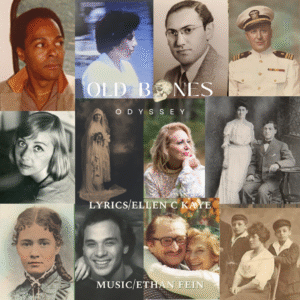
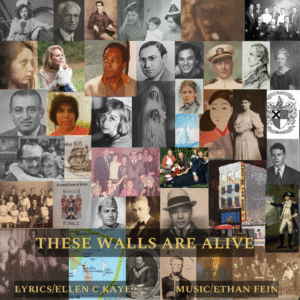
"old bones odyssey" - the album.
please click here for our linktree